Seeds of a Dream.
The Magic Inside Me.
How do you illustrate a real woman's life — her roots, her grief, her doctorate — in a way a child can hold, feel, and carry forward?
How do you illustrate a real woman's life — her roots, her grief, her doctorate — in a way a child can hold, feel, and carry forward?
Dr. Shanice Robinson is a professor, educator, and community changemaker who grew up on the streets of Richmond, California. She came to me with a vision: a children's book that told her real story directly to the young Black children who need to hear it most.
The book needed to do two things at once: be warm and accessible enough for a child to engage with. That tension was the design challenge from the very first page.
From the streets of Richmond to the halls of academia, Seeds of a Dream plants a message of hope, legacy, and power for every young Black child ready to bloom.
— Book back cover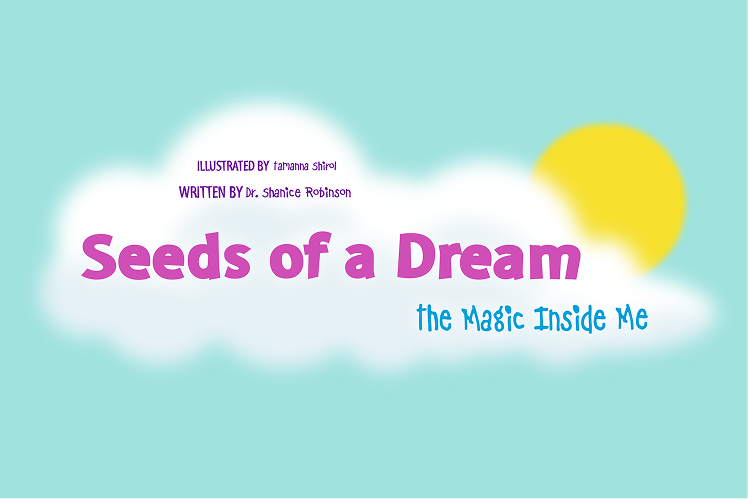
The book follows Dr. Shanice Robinson from childhood to her doctorate. It doesn't soften the hard parts. Friends lost to violence. The fragility of dreams in under-resourced communities. The loneliness of being the only one who looks like you in a room.
But it also holds the joy. Saturday hair braiding. The library. A mother who told her daughter education was a superpower. The book gives children a mirror, and gives them the proof that the path forward is real.
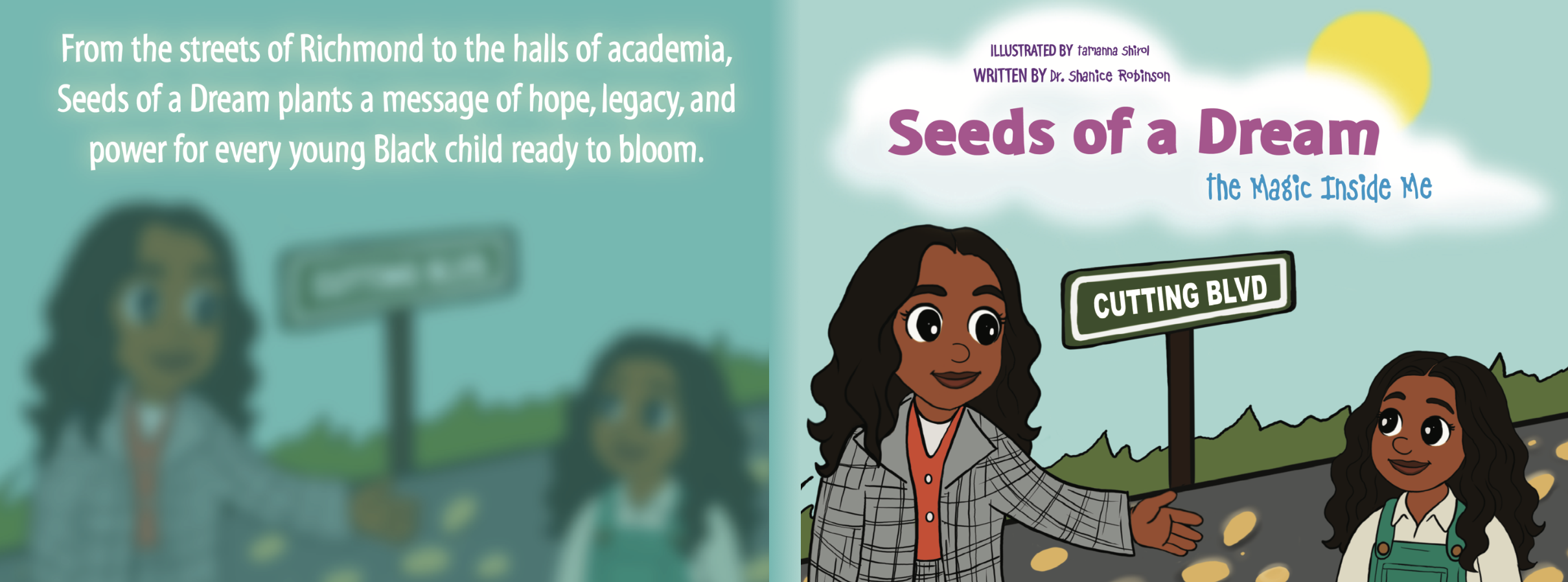
Each spread pairs a full illustration with Dr. Robinson's words. The layout gives the illustration room to breathe.
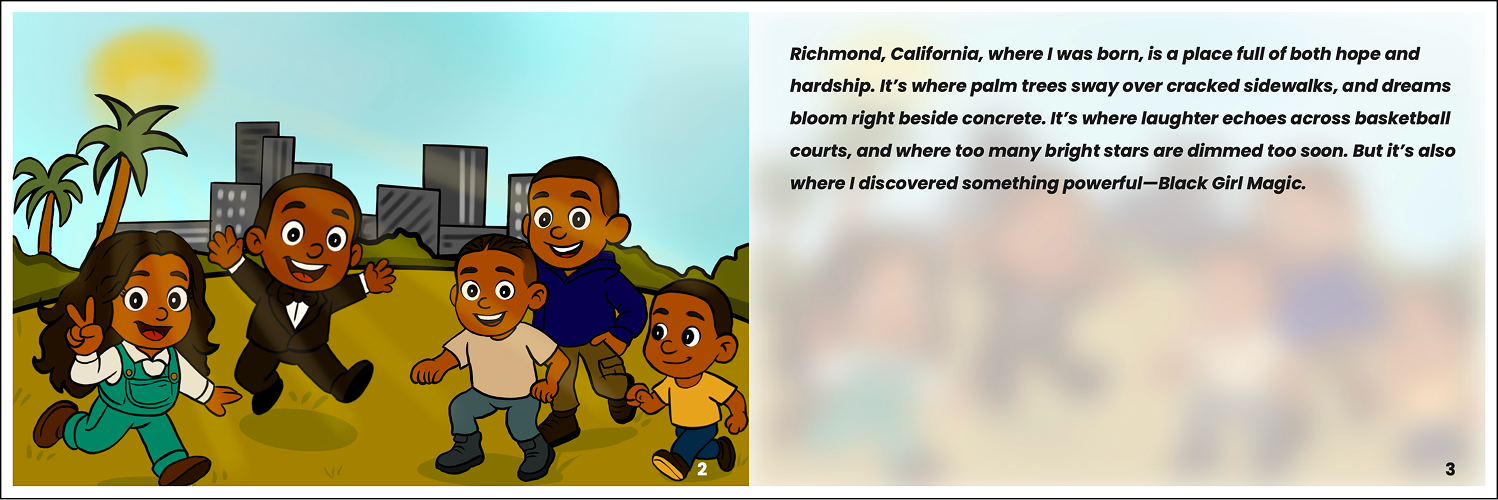
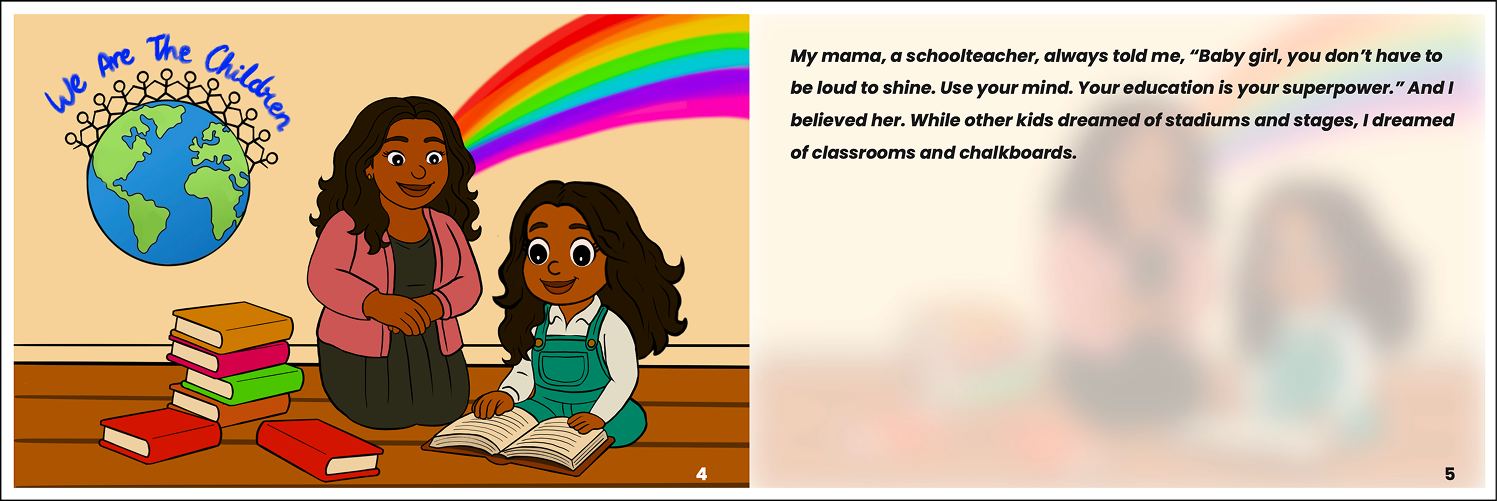
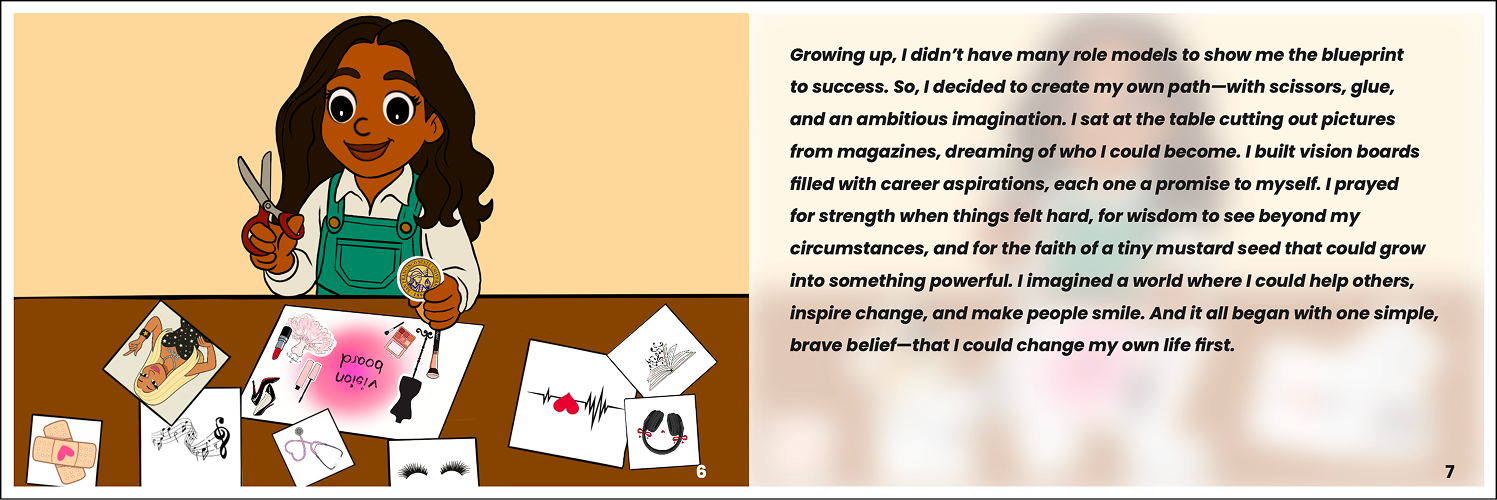
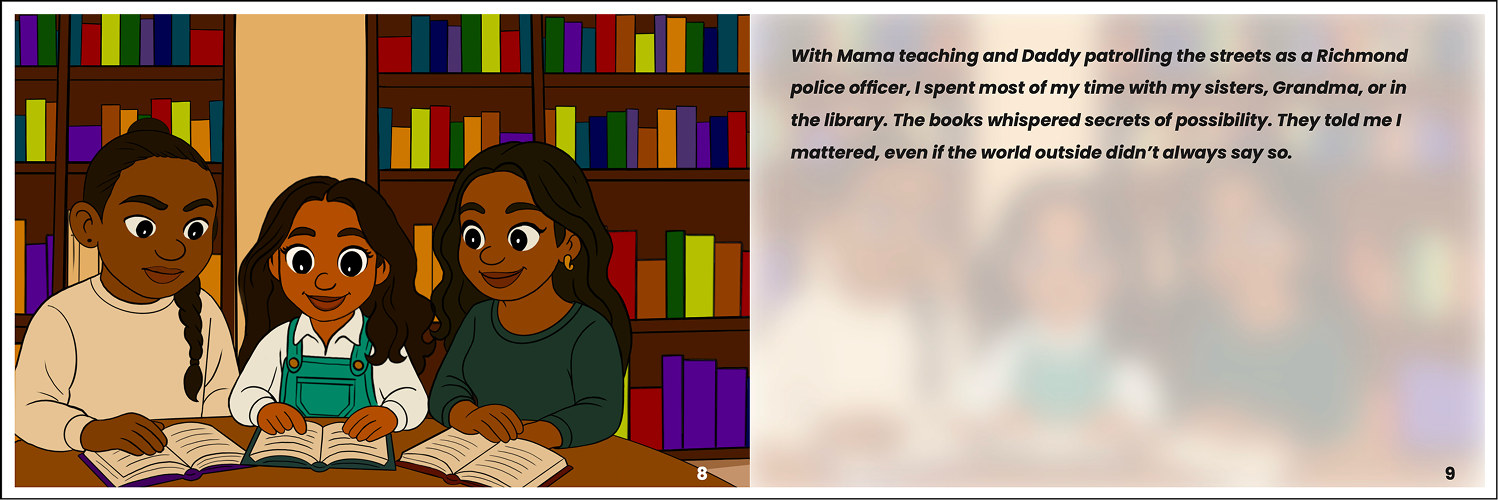
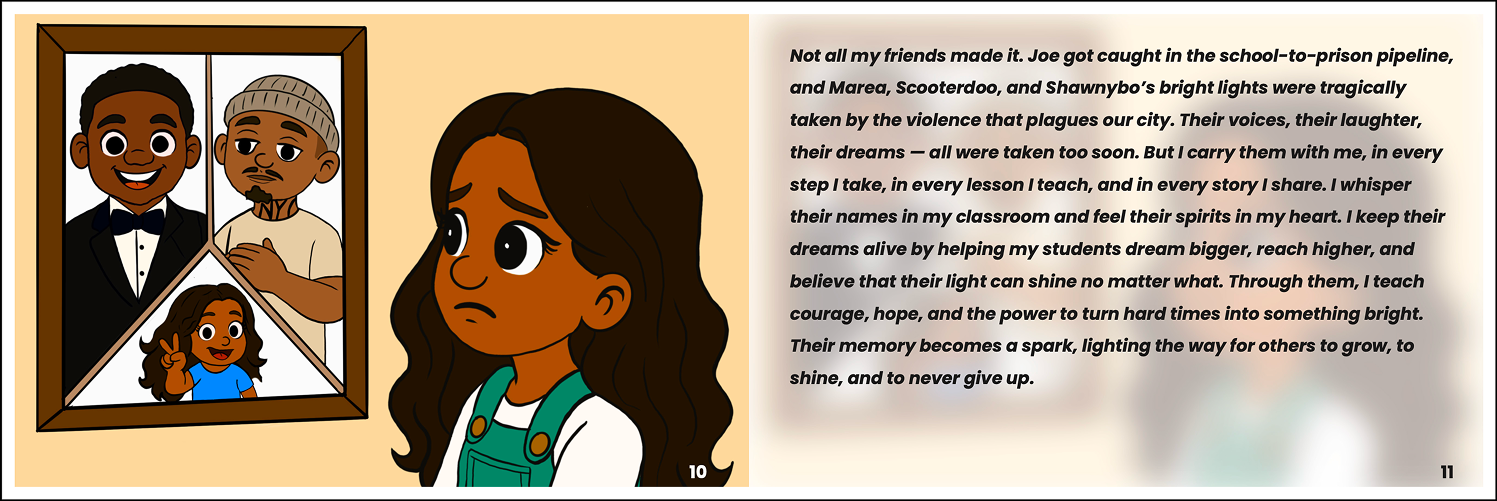
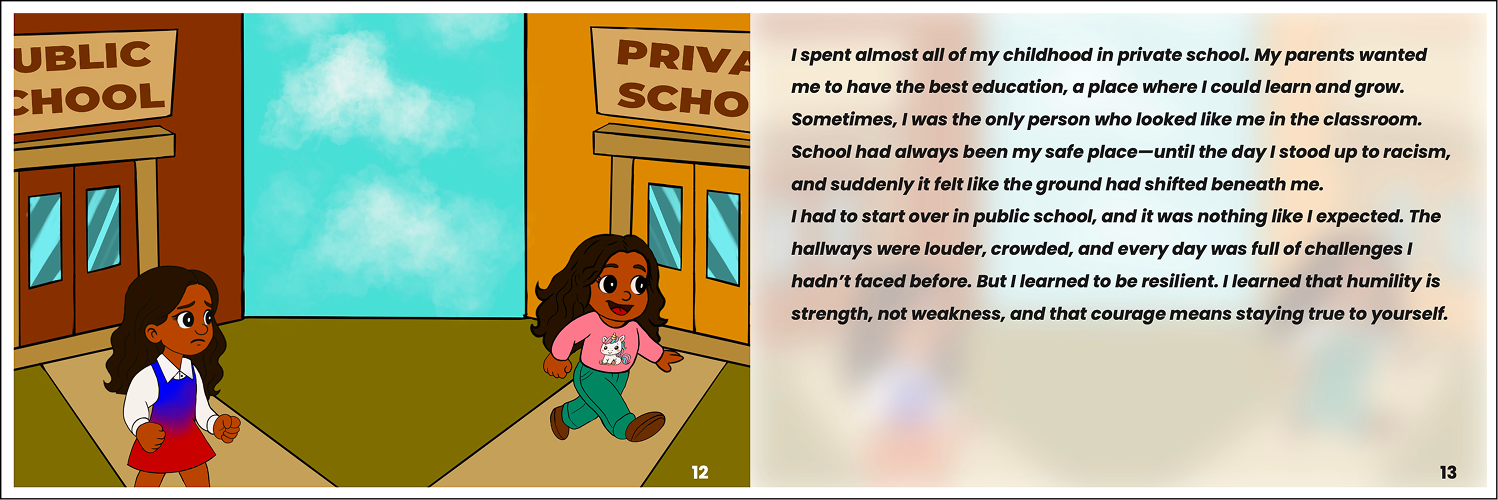
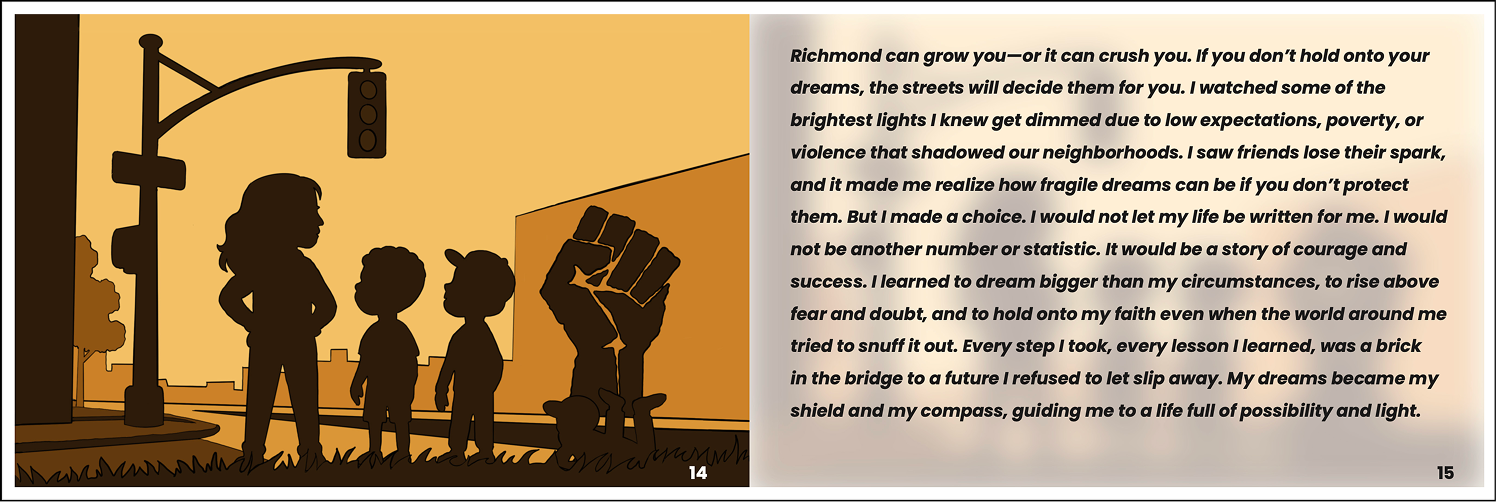
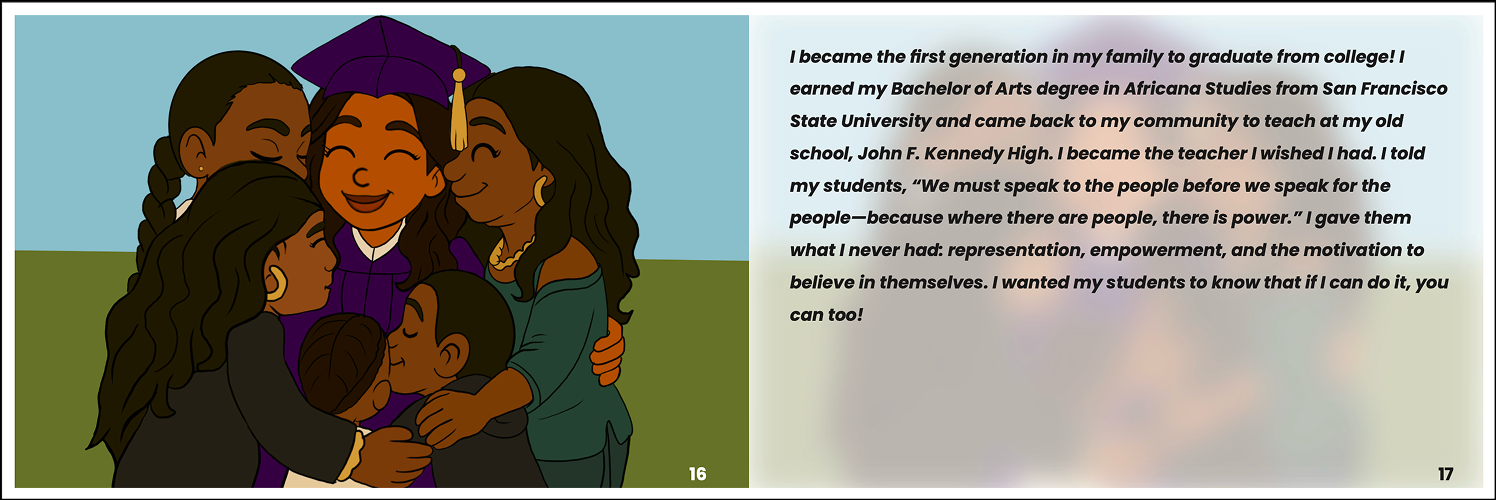
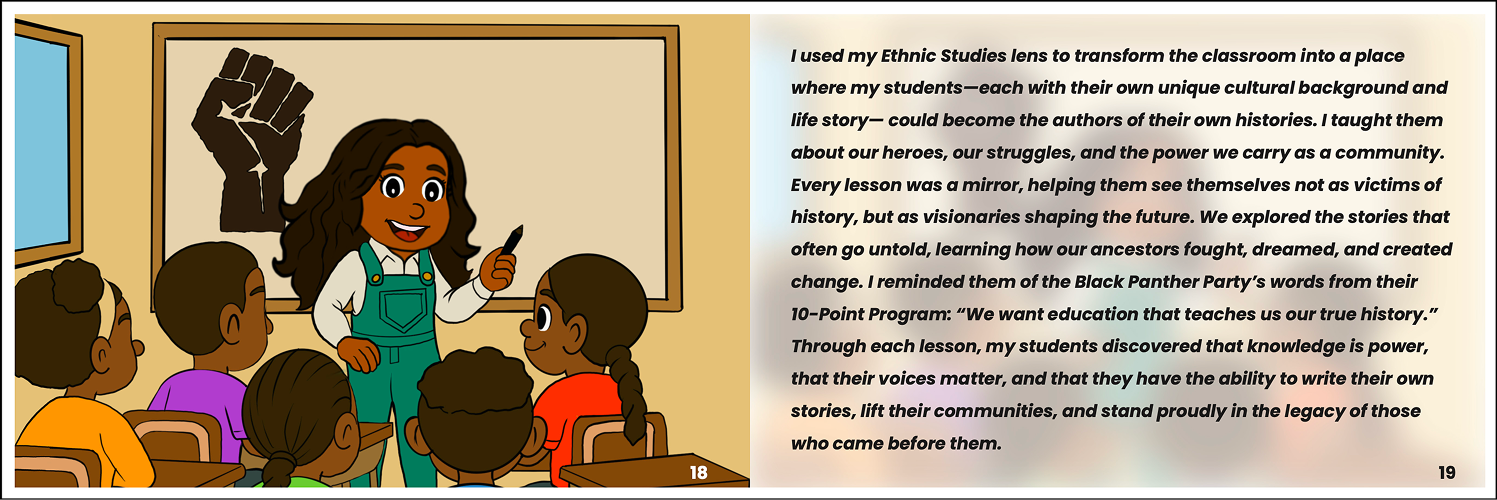
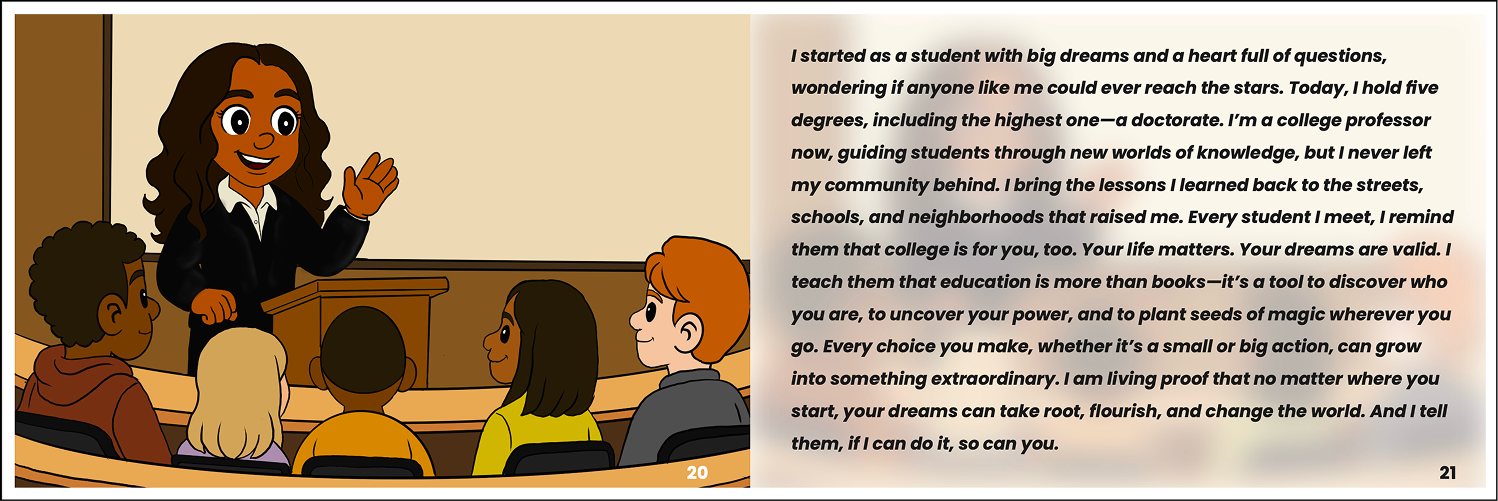
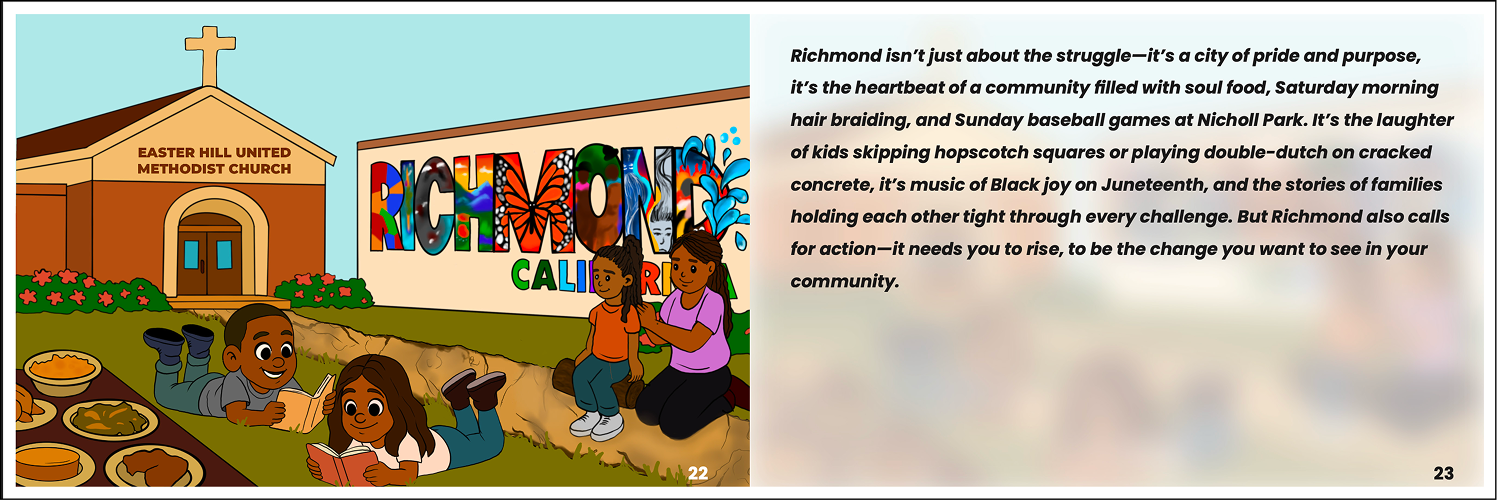
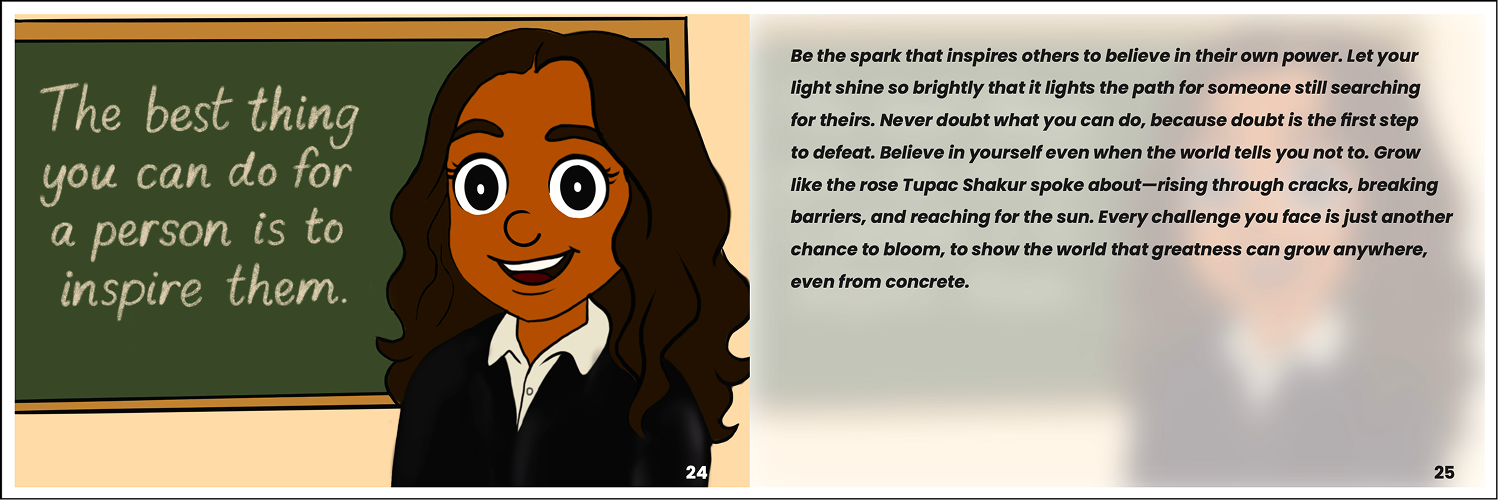
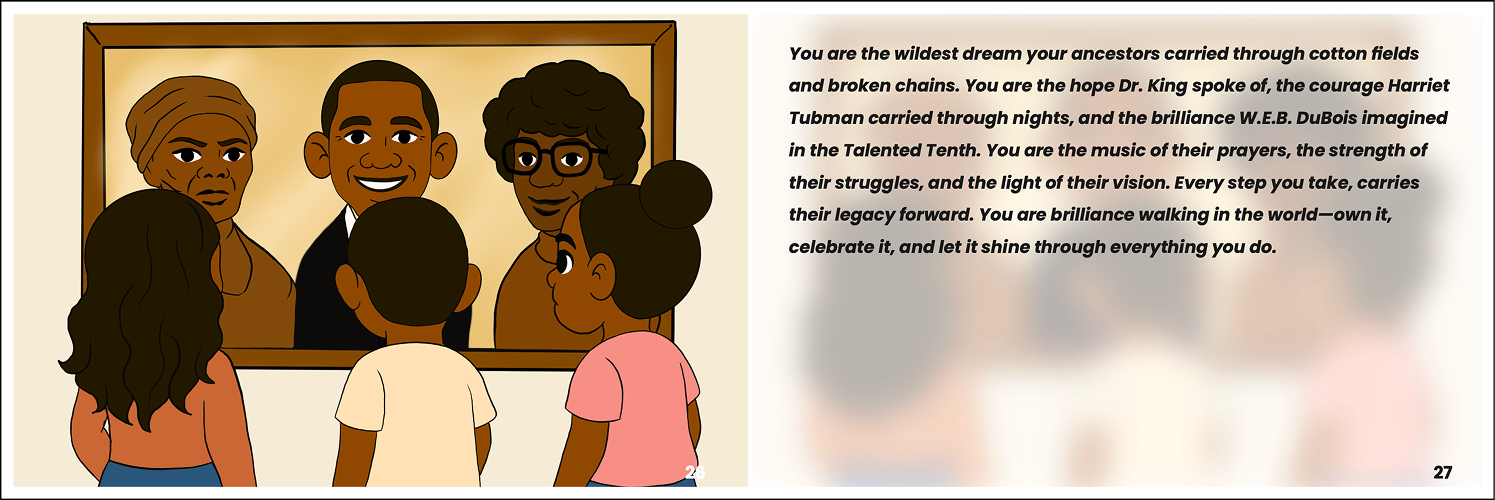
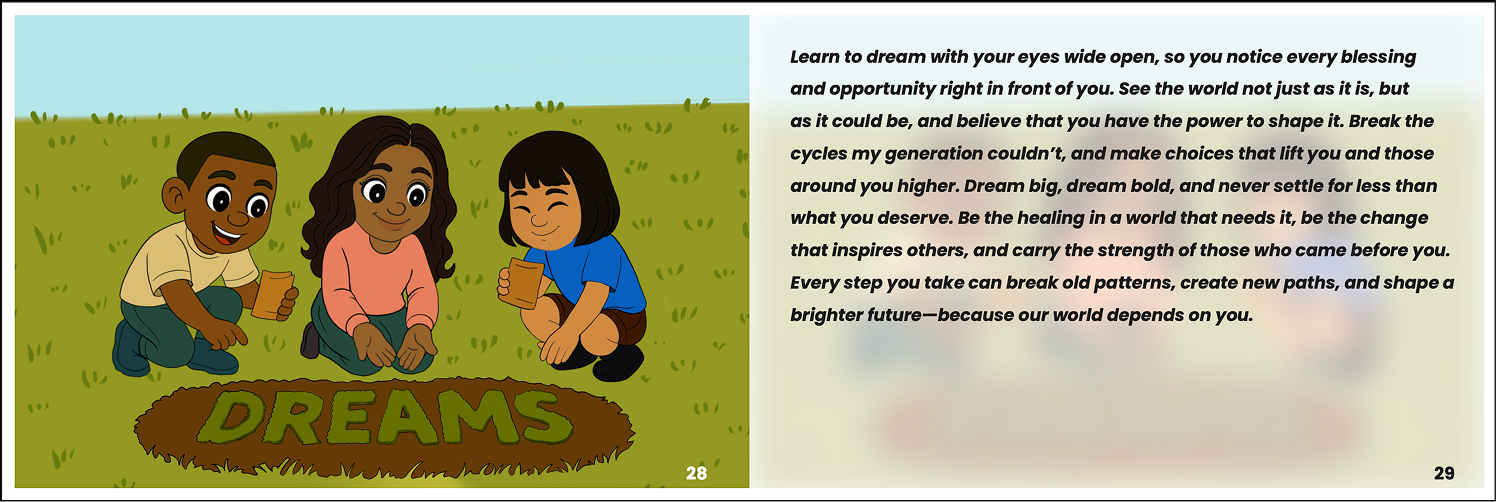
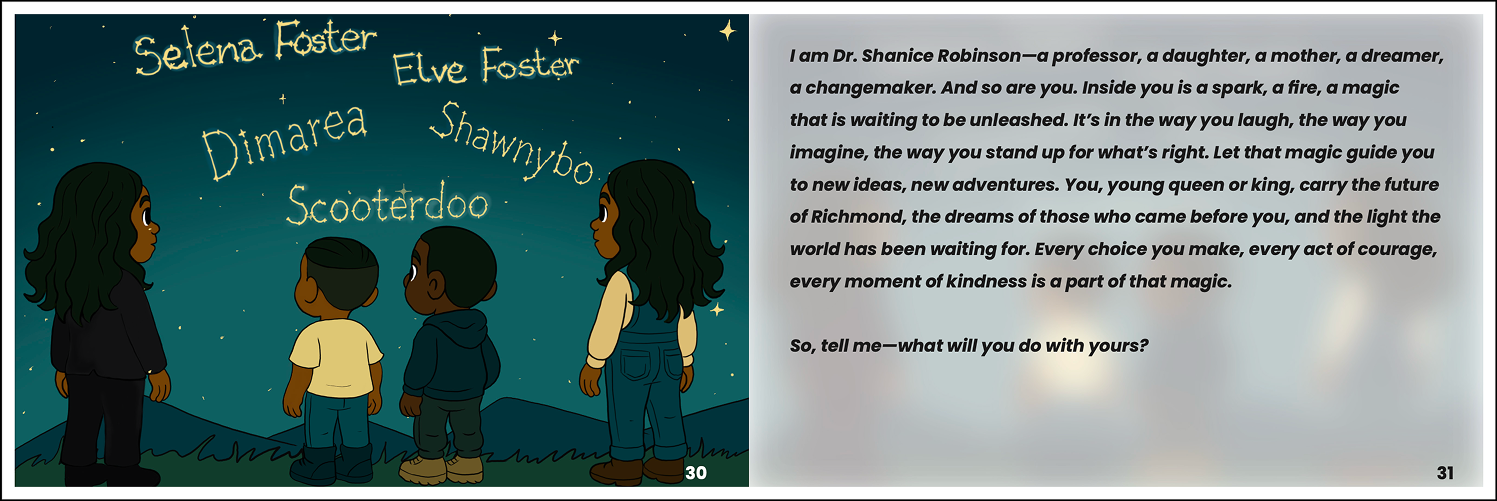

Dr. Robinson handed me her life. Every scene I drew was a version of her memory. That responsibility shaped every decision I made from character design onward.
The book sits between grief and joy, between a child's bedtime story and a community's survival. Finding a visual register was essential.
Dr. Shanice had to be recognisable as a six-year-old and as a professor. The character was a structural decision that held the whole book together.
The constraints of a children's book made me a more precise illustrator. Every image had to communicate completely.